
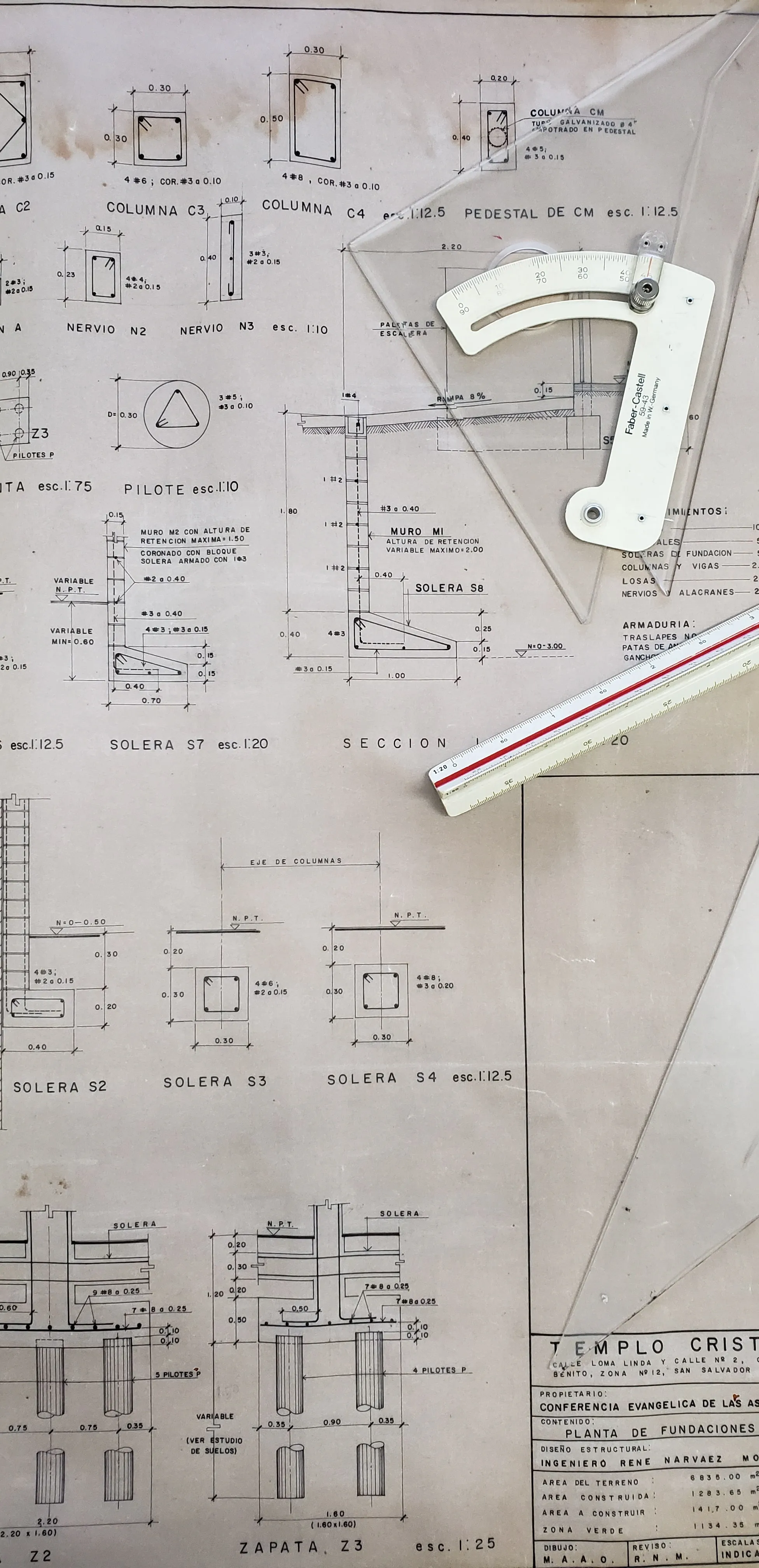
AutoCAD, 1993
The first firm in El Salvador to design with AutoCAD.
At the frontier
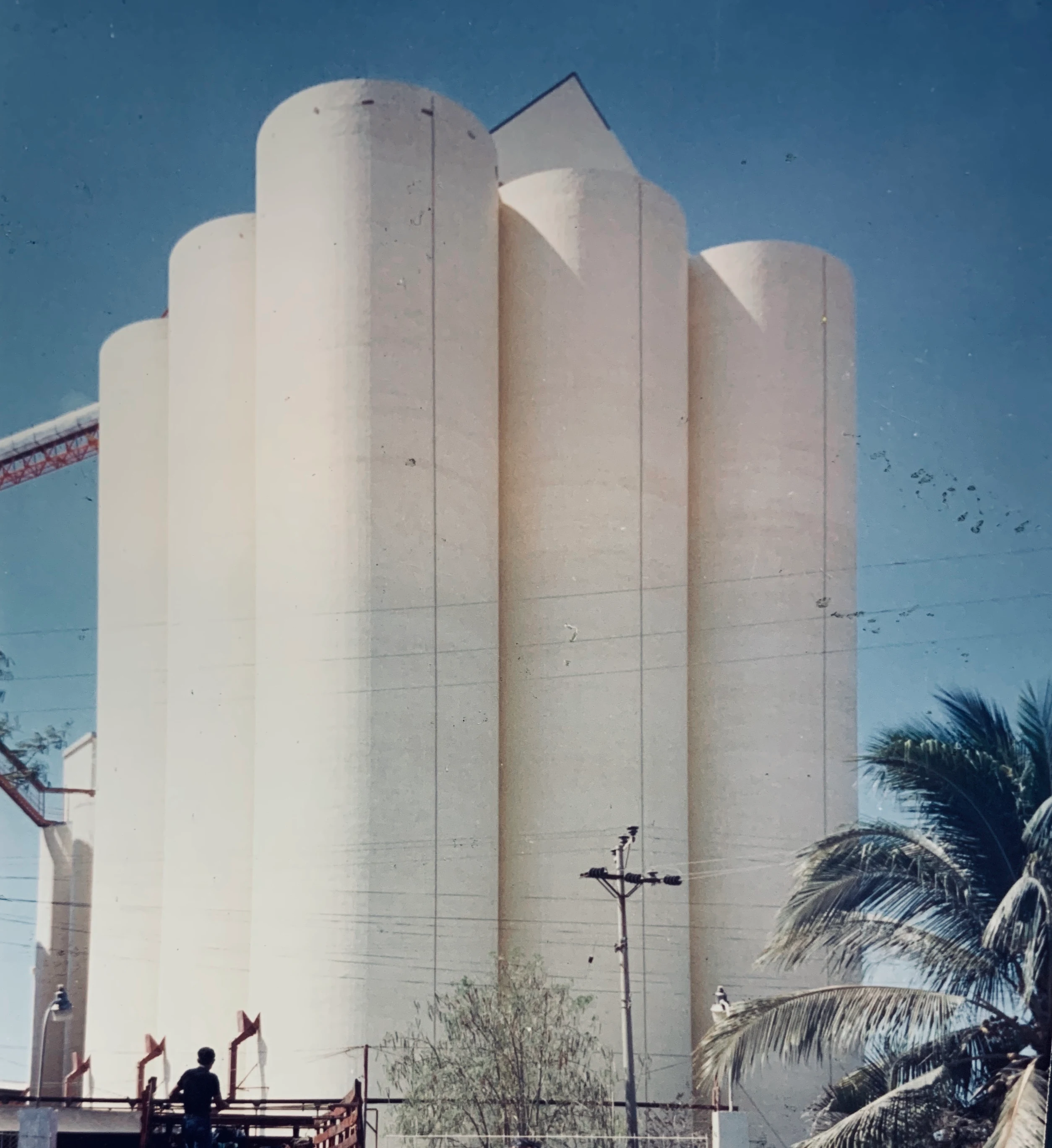
Silos de ALCASA Acajutla
Executive Director
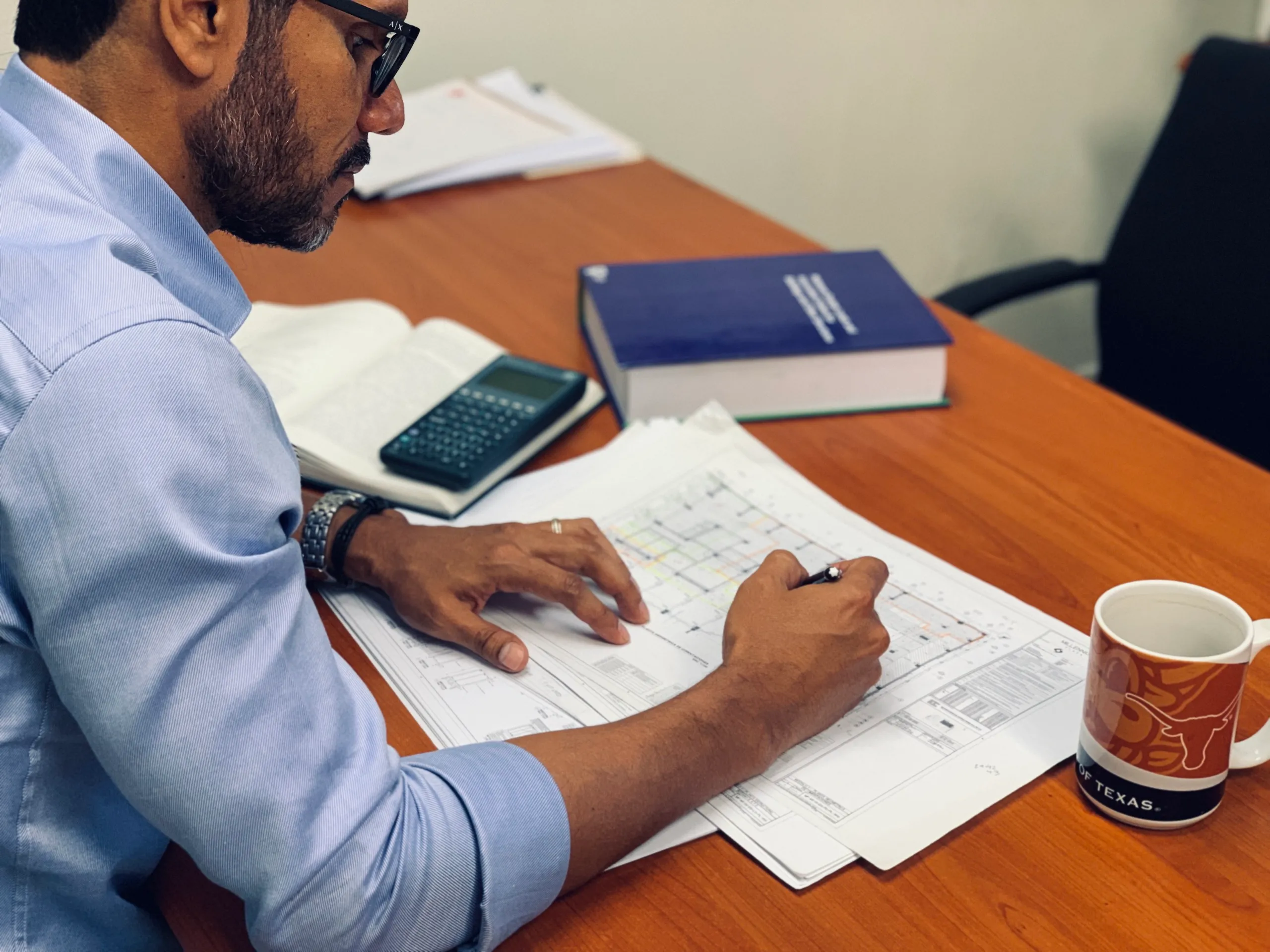
When a developer sets out to build the tallest tower in the country, they come to this office. Ing. Ricardo Narváez Hinds designs the structure of Horizon One, El Salvador's tallest planned tower, and ARELA, the second-tallest, now under construction. For Millennium Plaza—the tallest building yet built in the country—he served as independent reviewer and supervisor. He is also the engineer of record for the San Salvador Metrocable, the most ambitious mass-transit project the country has undertaken.
A specialist in reinforced concrete, steel and post-tensioning, he took the firm beyond conventional design—into geotechnics, geophysics and seismic protection—and, as MAURER's exclusive representative, delivered Central America's first seismic-damping building. He drove post-tensioning into the country at scale: today it is standard in the most demanding towers, and Narváez Hinds is its leading installer.
On Horizon One, the American structural giant KPFF joined his design. Today it is he who defines the skyline of El Salvador.
Leadership
A full team of more than 50: structural designers, BIM modelers, and post-tensioning residents and quality control.
Innovation
The first firm in El Salvador to design with AutoCAD.
The first to adopt BIM structural modeling with Autodesk Revit Structure.
The Fedecrédito retrofit with MAURER devices—Central America's first seismic damping. First Place, 2022 OPAMSS Award.
The country's first major post-tensioned tower—Torre Emblema Las Cascadas—with a 24 m clear span, designed and installed in-house.
Launch of the firm's own precast elements division.
El Salvador's first performance-based structural design—Horizon One.
History & tradition
Founder · 1973
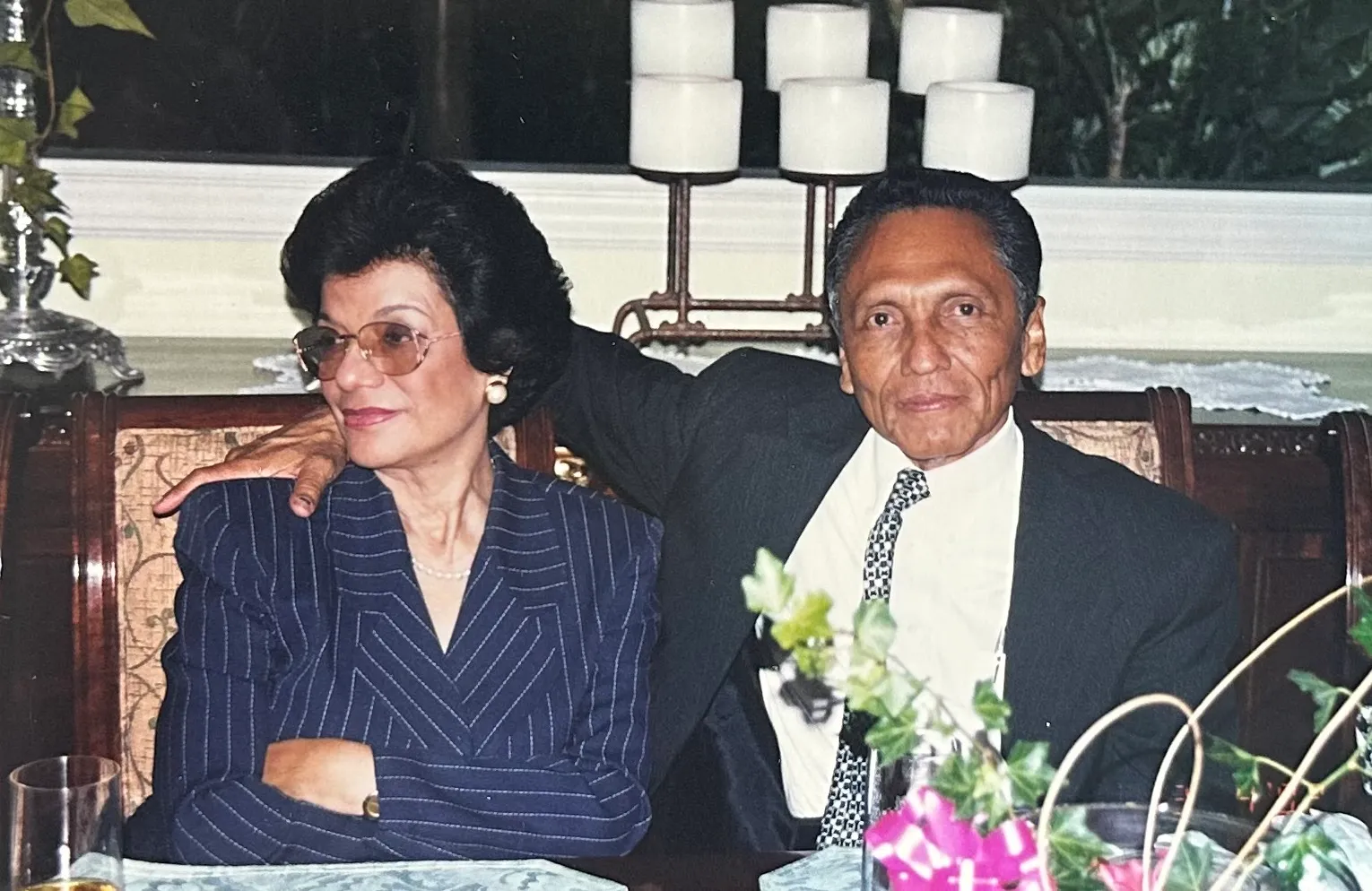
By 1973, René Narváez had been the second-ranked bachiller in the Republic and the top scorer in the Civil Engineering entrance exam at the Universidad Nacional, then the country's only university. He had become a professor: teaching was his trade.
That trade was taken from him. Amid the political takeover of the university, he was removed from his chair. With no work, he turned the third bedroom of his home into an office. In November he hired Migdalia Alvarado, his first employee—who is with the firm to this day. The firm was called Narváez Hinds Consultores. In the early years he taught part-time at the UCA to get by, leaving it once the firm could sustain him.
On the recommendation of engineer Eduardo Bolaños, he designed the Almacenes Simán parking building (1974), his first substantial commission. The October 1986 earthquake damaged it badly; René led the repair—epoxy resin and a steel jacket around the columns—and the building held, as it would through the 2001 earthquake. In a country measured by its earthquakes, the firm had given an early proof of its craft.
In late 1974 the firm moved to La Escalón, where it stayed for more than three decades, through the years of the civil war, which it crossed without closing. There the architecture section of Ana Cristina Hinds joined it—herself the Republic’s second-ranked bachiller a year before him, and the surname the firm carries. She was the first woman to graduate as an architect in El Salvador. Her major work was the Templo Cristiano de las Asambleas de Dios: she was responsible for the architecture; he, for the structure.
In 1981, without leaving the firm, he co-founded the Universidad Evangélica de El Salvador and served as its first secretary-general and vice-rector: teaching, his original trade, never quite left him.
Ricardo joined in 1995 and, over the years, the firm's direction passed entirely to the second generation. René recognized in him an uncommon double gift: the engineer's talent and the entrepreneur's. He retired in 2006, by then a leading figure in Salvadoran construction.
Half a century on, the firm born in a bedroom designs the tallest towers in the country. Migdalia, hired in 1973, remains the thread that ties the first day to the present.
The firm today
Since 1998, Ing. Ricardo Narváez Hinds has led Narváez Hinds. What rises in El Salvador today bears his signature.
Contact →